
Cart
0
Eltraderm Skinsights
You have invested real money, and in some cases real discomfort, in a professional skin treatment. RF, HIFU, microneedling, laser, chemical peels. Whatever the modality, the expectation is the same: results that last.
Here is what most clinics do not spend enough time explaining at checkout: the treatment starts a process. Your skincare routine determines how far that process goes.
This is not a sales pitch for more products. It is an explanation of the biology, and once you understand it, the logic of a targeted post-treatment protocol becomes obvious.
What Your Treatment Actually Does
Every energy-based or resurfacing treatment, regardless of modality, works the same way at a biological level. It creates controlled injury at a specific depth, and the body responds with a wound-healing cascade: inflammation, followed by fibroblast activation and new collagen production, followed by a longer remodeling phase where that new collagen matures and integrates into the surrounding tissue.
This process is not instantaneous. Depending on the treatment, the full arc typically unfolds over three to six months. The visible results you are ultimately paying for, tighter skin, improved texture, reduced fine lines, are the output of that full process completing, not just the appointment itself.
The treatment triggers the process. It does not complete it on its own.
Why the First Week Sets the Tone
In the days immediately following treatment, the skin's barrier has been intentionally disrupted. This is a normal and necessary part of how these treatments work, but it also means the skin is temporarily more vulnerable to irritation, moisture loss, and environmental stress.
A minimal, barrier-supportive routine in this window (gentle cleanser, hydrating serum, moisturizer, and diligent SPF) gives the skin the stable conditions it needs to move through the inflammatory phase without added disruption. Introducing active ingredients, physical exfoliants, or heat exposure during this window works against the process rather than with it.
Why Weeks Two Through Twelve Matter Most
This is the window where fibroblast activity, and therefore new collagen production, is at its highest. It is also the window most people abandon their post-treatment routine, either because visible redness has faded or because the novelty of a new regimen wears off.
That timing mismatch is the single biggest reason people under-realize the results they paid for. The skin's repair process does not follow the same timeline as your motivation to stick with a routine. Consistent use of a a hydrating collagen product and peptide serum through this window gives the skin ongoing surface support and amino acid availability while the deeper remodeling work continues, whether you can see it happening day to day.
Daily broad-spectrum SPF remains non-negotiable throughout. Treated skin is more photosensitive during this entire window, and UV exposure actively degrades the same collagen the treatment is working to rebuild.
The Eltraderm Approach
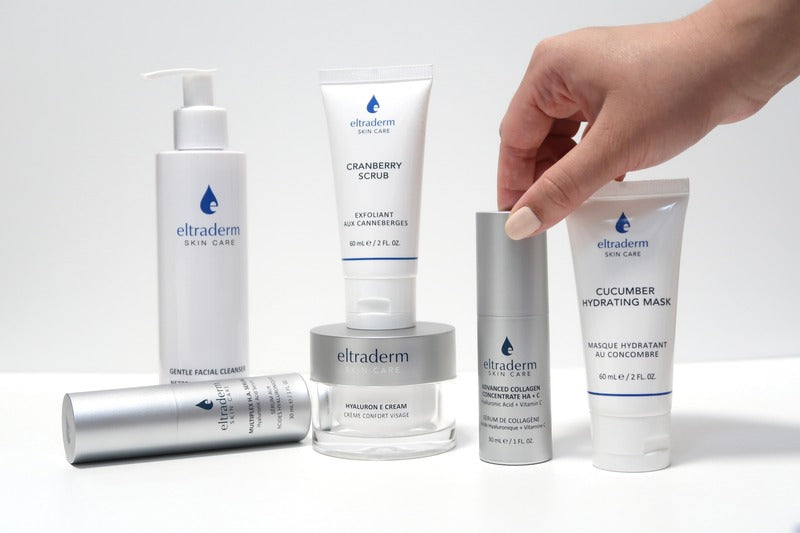
Eltraderm's procedure-care range is built specifically for this context: professional treatments followed by a structured home care protocol. Our formulations are developed for clinical use, which means the ingredient choices are functional rather than decorative and the concentrations are meaningful rather than label claims.
For product information and professional pricing, visit eltraderm.com.
The Takeaway
Your treatment created the conditions for your skin to rebuild. Your skincare protocol determines whether those conditions are maintained long enough for the rebuild to complete.
Barrier support in the first week. Collagen and peptides consistency through week twelve. SPF every single day. That is the protocol. It is not complicated, but it has to be consistent.
The treatment opened the window. Your routine keeps it open.


