

Cart
0
Eltraderm Skinsights
Professional skin tightening treatments, including RF, HIFU, ultrasound, and radiofrequency microneedling, produce results that develop over months and can last a year or more with the right maintenance. That last part is where most clients leave results on the table.
The treatment initiates a collagen-building process. What you do between sessions determines how much of that process completes, how well the results hold, and how your skin responds when you return for the next treatment in a series. This is not a passive window. It is an active one.
This guide covers the skincare habits, ingredient choices, and lifestyle factors that maintain skin tightening results between professional treatments, and the ones that quietly undermine them.
Understand What You Are Maintaining
Before covering what to do, it helps to be clear about what skin tightening results actually are, because maintaining something requires understanding what it is.
RF, HIFU, and ultrasound devices work by triggering controlled thermal injury in the dermis and, in some cases, deeper tissue layers. The skin responds by producing new collagen and elastin, the structural proteins that restore firmness, lift, and resilience. That new collagen matures over several weeks post-treatment. The lifting and tightening you see weeks later is the result of collagen that was only beginning to form on the day of your treatment.
What you are maintaining between treatments is that collagen. Collagen can be degraded by UV exposure, oxidative stress, inflammatory triggers, and the natural aging process, all of which continue regardless of how good your last treatment was.
Maintenance skincare is not about adding more. It is about protecting what the treatment built and providing the conditions for it to continue developing.
The Non-Negotiables
Daily Sun Protection
UV radiation is the single most significant environmental driver of collagen degradation. UVA rays, present year-round, penetrating glass, and not blocked by clouds, directly degrade collagen fibers and activate the enzymes (matrix metalloproteinases) that break down the dermis. Every day you skip SPF is a day you are actively working against the results you have invested in.
Broad-spectrum SPF 30 at minimum, applied every morning as the last step before leaving the house. Use a higher SPF for extended outdoor exposure. Reapplication every two hours if you are outdoors for prolonged periods.
This is not a skincare preference. For anyone who has invested in a professional skin tightening treatment, daily SPF is the most cost-effective maintenance tool available, and the failure to use it consistently is the most common reason results fade faster than they should.
A Consistent Peptide Serum
Signal peptides and carrier peptides support fibroblast activity, the ongoing production of collagen and elastin that your treatment activated. Fibroblast activity does not simply stop when the acute recovery period ends. It continues at a lower baseline level for months post-treatment, and topical peptides provide a complementary input that supports that ongoing activity.
Applied twice daily, morning and evening, a peptide serum used consistently over months accumulates an effect that a sporadic routine does not replicate. This is not a product you use until your skin feels better and then set aside. It is a daily maintenance tool for the duration of your treatment series and beyond.
A Marine Collagen Hydrator
Hydrolyzed marine collagen applied topically supports barrier function, provides amino acid building blocks during the ongoing repair phase, and maintains the surface environment that the deeper structural work requires. Between treatments, when the skin is not in acute recovery but is still in an active remodeling phase, a marine collagen hydrator keeps the skin in the best possible condition to support what is happening daily.
The combination of a peptide serum and a marine collagen hydrator, applied consistently twice daily, is the maintenance protocol that compounds with professional treatments most effectively. Neither is redundant. They address different points in the same biological process.
What Actively Degrades Your Results
Knowing what undermines skin tightening results is as important as knowing what maintains them.
Unprotected UV exposure. Already covered, and still the most significant external collagen degrader. It is worth repeating because it is the most commonly underestimated threat to treatment results.
Smoking. Tobacco smoke generates significant oxidative stress in skin tissue and directly impairs collagen synthesis. It also constricts the blood vessels that deliver oxygen and nutrients to the dermis. For clients who smoke, the gap between treatment results and maintenance potential is wider than for non-smokers, and it narrows significantly with cessation.
High glycemic diet. A diet consistently high in refined sugar and high-glycemic carbohydrates drives a process called glycation, the binding of sugar molecules to collagen fibers, which makes them rigid, brittle, and more susceptible to degradation. This is a slower process than UV damage but a cumulative one. Reducing dietary sugar is one of the more impactful lifestyle changes for maintaining skin structure over time.
Chronic sleep deprivation. The majority of the skin's repair activity, including collagen synthesis, cell turnover, and growth factor release, occurs during sleep. Consistently poor sleep reduces the efficiency of these processes, slowing the collagen maturation that post-treatment recovery depends on. Seven to nine hours of quality sleep per night is not a wellness luxury in this context. It is a biological requirement for skin repair.
Inflammatory triggers. Chronic low-grade inflammation, driven by stress, poor diet, alcohol excess, or autoimmune activity, activates the same matrix metalloproteinases that UV exposure triggers, degrading existing collagen and impairing new synthesis. Managing systemic inflammation through diet, stress reduction, and sleep supports skin structure in ways that topical skincare alone cannot fully compensate for.
Between-Treatment Skincare: The Full Routine
For clients in an active treatment series, typically three to six sessions spaced four to six weeks apart for RF microneedling, or one to two sessions annually for HIFU and ultrasound, the maintenance routine runs continuously between appointments.
Morning: Gentle facial cleanser. Peptide serum. Marine collagen hydrator. Broad-spectrum SPF 30 or higher.
Evening: Gentle cleanser. Peptide serum. Marine collagen hydrator. Optional gentle retinoid if tolerated and cleared by your provider. For some, retinoids support collagen synthesis and cell turnover and are a useful addition to the maintenance routine once the acute recovery period has passed.
Weekly: A gentle exfoliant, either enzyme-based or low-concentration AHA, to support cell turnover and maintain the surface texture improvements the treatment produced. Once weekly is sufficient. More frequent exfoliation does not accelerate results and can compromise barrier integrity over time.
When to Return for Your Next Treatment
The timing of your next session matters as much as the home care between them. Returning too early, before the collagen remodeling from the previous session has completed, means you are treating skin that is still rebuilding rather than skin that has fully responded to the prior stimulus.
Most providers recommend:
RF microneedling: Four to six weeks between sessions in a series of three to six treatments.
RF skin tightening (non-microneedling): Four to eight weeks between sessions in a series, or six to twelve months for maintenance sessions after a series is complete.
HIFU and ultrasound: Six to twelve months between sessions, as the collagen remodeling cycle initiated by deep ultrasound energy requires a full arc to complete before a new stimulus is introduced.
These are general guidelines. Your provider will calibrate timing based on their specific device, treatment depth, and how your skin has responded.
A Note for Practitioners
Clients who understand the maintenance window between treatments are more engaged, more compliant with home care protocols, and more likely to return for their next session on schedule. Educating clients about what their skin is doing between appointments, and giving them a clear, simple protocol to support it, is one of the most effective things you can do for both their results and your retention rate.
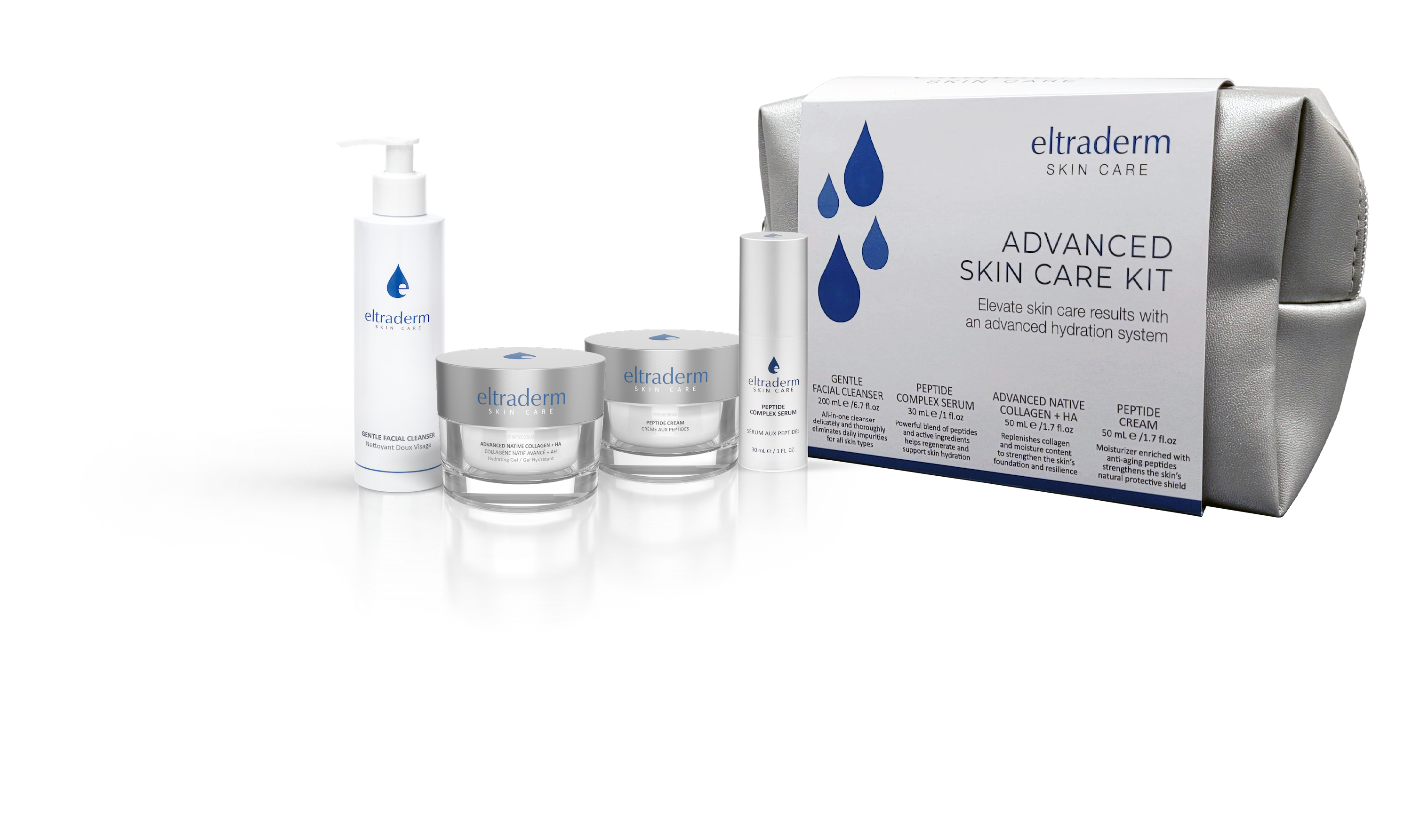
A straightforward maintenance kit of peptide serum, marine collagen hydrator, and SPF, with clear usage instructions and a follow-up touchpoint at the six-week mark, gives clients the structure they need to stay on track between visits.
Eltraderm's procedure-care range is designed for exactly this maintenance context. For professional pricing and product information, visit eltraderm.com.
The Takeaway
Skin tightening results are not static. They develop after treatment, peak at three to six months, and then require active maintenance to hold. The collagen your treatment built can be protected or degraded, and the choices made between sessions determine which direction it goes.
Daily SPF. Consistent peptide serum. Marine collagen hydrator. Adequate sleep. Managed inflammation. These are the habits that keep your results working between treatments and make each subsequent session more effective than the last.
The treatment builds the foundation. The maintenance is what you build on top of it.


